 Jwumasay joo-maJwumasay joo-ma
Your language, your city, your eye for detail. Jwuma pays for the kind of knowledge that can't be scraped off the internet. And treats the people supplying it as the reason the work is any good.
Qualify once and you can take on any project type you're eligible for. Most contributors end up doing more than one.
Photograph real places from your phone. Market stalls, storefronts, signage, produce. Against a structured checklist. Works offline and syncs when you get signal back, which matters if you're working somewhere with patchy coverage.
Good if: you can move around your area and have a working phone camera.
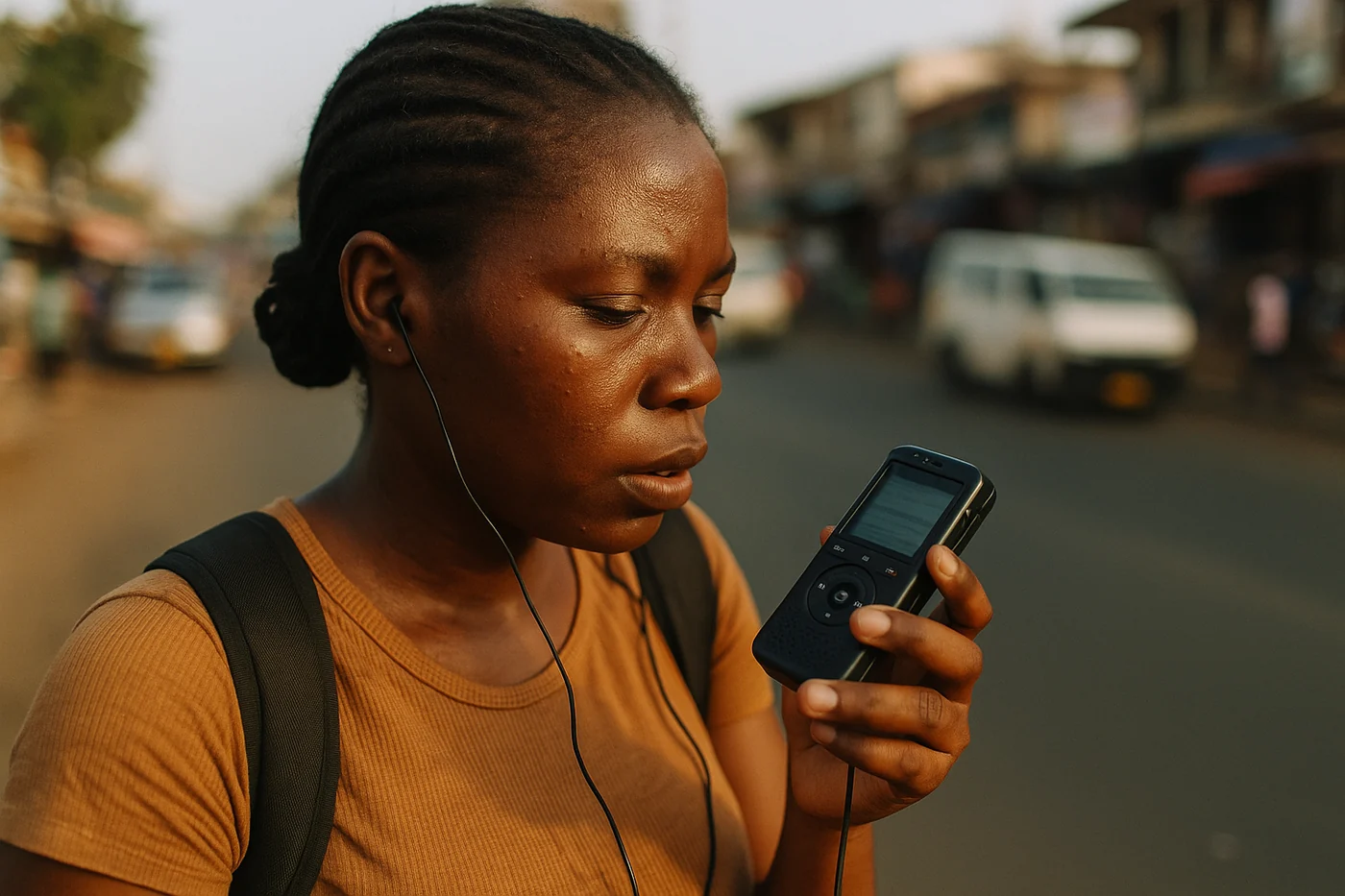
Turn short audio clips into text with speaker turns and code-switch tagging, marking where a speaker moves between languages mid-sentence. This is skilled work that only fluent speakers can do properly and it's priced accordingly.
Good if: you're fluent in a language pair and type accurately.
Read AI-generated output and score it against a written rubric. Every criterion is concrete and defined in advance. You are never asked to guess at a feeling or to assess anyone's character.
Good if: you read carefully and can apply a rule consistently.
Every task shows its rate before you reserve it. Every accepted task posts immediately to a ledger you can watch. There are no platform fees and no deductions. The rate you see is the rate you earn.

Data work has a reputation, much of it earned. These are the commitments built into how this platform actually operates, not a values page, but constraints in the software.
You choose which tasks to take and when to work them, within each project's own terms. There are no shifts, no minimum hours and no penalty for taking a week off. That independence is real, but it does mean you're responsible for your own tax position in your country. We don't withhold on your behalf unless your jurisdiction requires it, in which case you'll be told before you start.
Automation on this platform can flag work for review or hold it pending a check. It cannot reject your submission, decline your application or restrict your account. Every one of those decisions is made by a named person and recorded in an audit log. If a decision goes against you, there is a human who made it and a written reason attached to it.
Each project's rubric or capture checklist is taught during onboarding and frozen when work begins. Reviewers apply that same frozen standard. If your work is rejected you get the specific criterion, not a vague score, plus a cure window to fix and resubmit rather than losing the work entirely.
Reviewer decisions can be escalated. A team lead or senior lead can overrule a QA decision in either direction and the overrule is logged with a reason. Reviewers are themselves measured on overrule rate, so a reviewer who is consistently wrong is visible to us.
Your documents, identity details and submissions are stored in the database for your own region rather than pooled into one global store. Clients commissioning the work never see contributor identities. We store performance metrics. Acceptance rate, throughput, reliability. And deliberately do not store personality or behavioural inferences about you.
The moment internal QA accepts your work, you're credited. What the client does afterwards on their own review clock is a commercial matter between us and them. It does not touch your money. This is a deliberate structural choice, because the alternative makes contributors carry a risk they have no control over.
Creating an account is free and takes about a minute. You'll only ever be shown work you're actually eligible for.